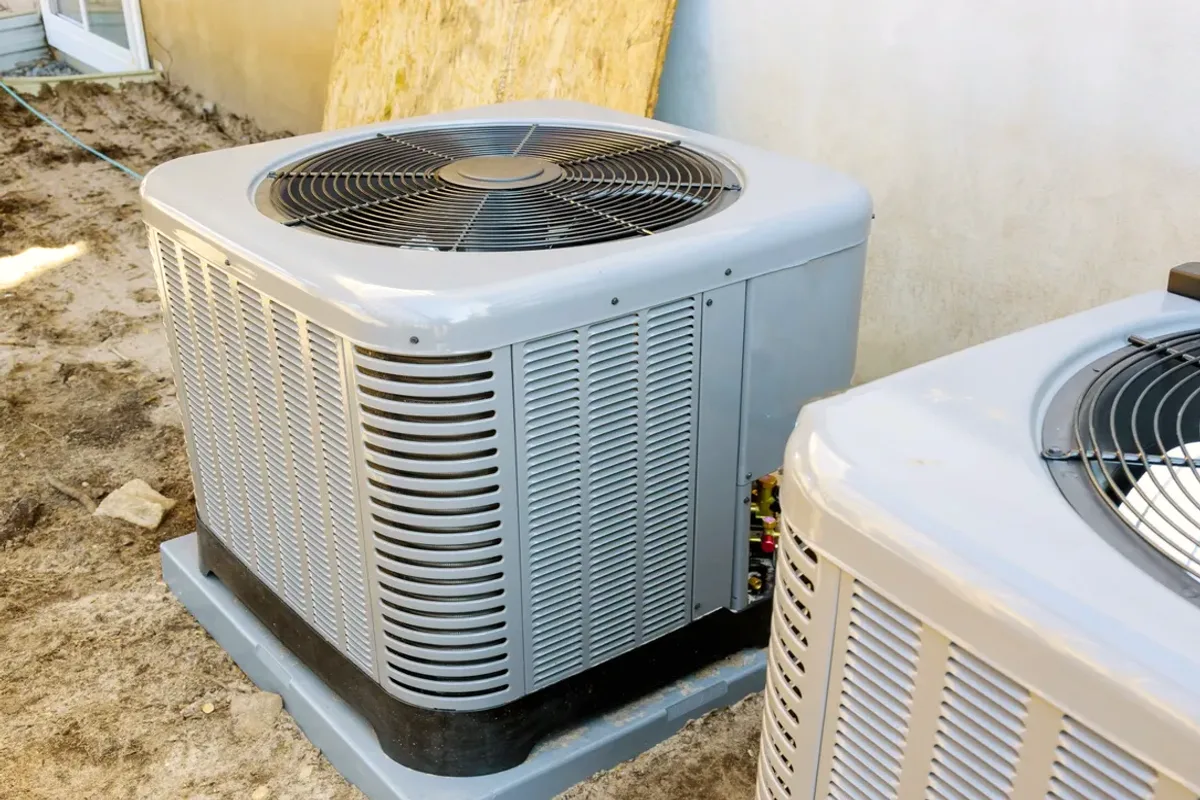
Is the cooling problem affecting every room or only one indoor unit?
An air conditioner that runs without cooling, blows warm air, freezes, leaks water, or makes unusual noise needs a diagnosis matched to its equipment. Central systems and ductless units have different components and access points, while refrigerant, airflow, electrical, and condensate faults can produce overlapping symptoms. Record whether the problem affects one indoor head or the whole system, when it began, and any visible error code to help define the service request.
The assessment should identify whether the fault is in the compressor, fan, coil, refrigerant circuit, airflow path, or condensate drainage. These causes require different tests and repairs, and a frozen coil or standing water should not be treated as the diagnosis by itself. Equipment type, operating history, and whether symptoms are isolated to one zone help distinguish a repair from a broader system issue.
Central and ductless cooling diagnosis
Refrigerant, compressor, fan, coil, and airflow faults
Condensate drainage and repair-versus-replacement decisions
Assessment and Scope
Questions for the Proposed Work
01
Trace warm air and weak cooling to the source
Warm supply air can result from a failed electrical component, a compressor or fan problem, restricted airflow, or a refrigerant-circuit fault. A coil that freezes may reflect more than one underlying condition, so simply thawing it does not establish what needs repair. Central systems and ductless equipment should be assessed according to their design, with operating symptoms and equipment records guiding the diagnostic path.
02
Treat condensate drainage as a separate fault path
Water near an indoor unit can point to a blocked condensate line, a drain-pan problem, or a float switch stopping operation. The location of the water and the unit's shutdown behavior help distinguish a drainage issue from a cooling or refrigerant fault. Where inspection finds a drain obstruction, clearing and checking the drainage path is distinct from routine chemical treatment, which should not be assumed necessary.
03
Compare repair and replacement on condition, not age alone
A failed capacitor, contactor, fan, or other replaceable component may support repairing a system that is otherwise in serviceable condition. A compressor fault or recurring refrigerant leak can change the comparison, particularly if the equipment uses a refrigerant with limited availability. Review the confirmed defect, repair history, and condition of the remaining system before deciding whether repair or replacement better fits the property.
Compare the next step
Use the same cooling complaint and equipment information when requesting a second proposal. Ask why the scopes differ and whether either assumes additional work after diagnosis. A repair, a matched-system replacement, and a distribution improvement solve different problems and should not be compared as interchangeable equipment prices.
Do not open electrical panels or handle refrigerant. If ice, water near electrical equipment, or abnormal operation is present, stop using the affected system and request an assessment.