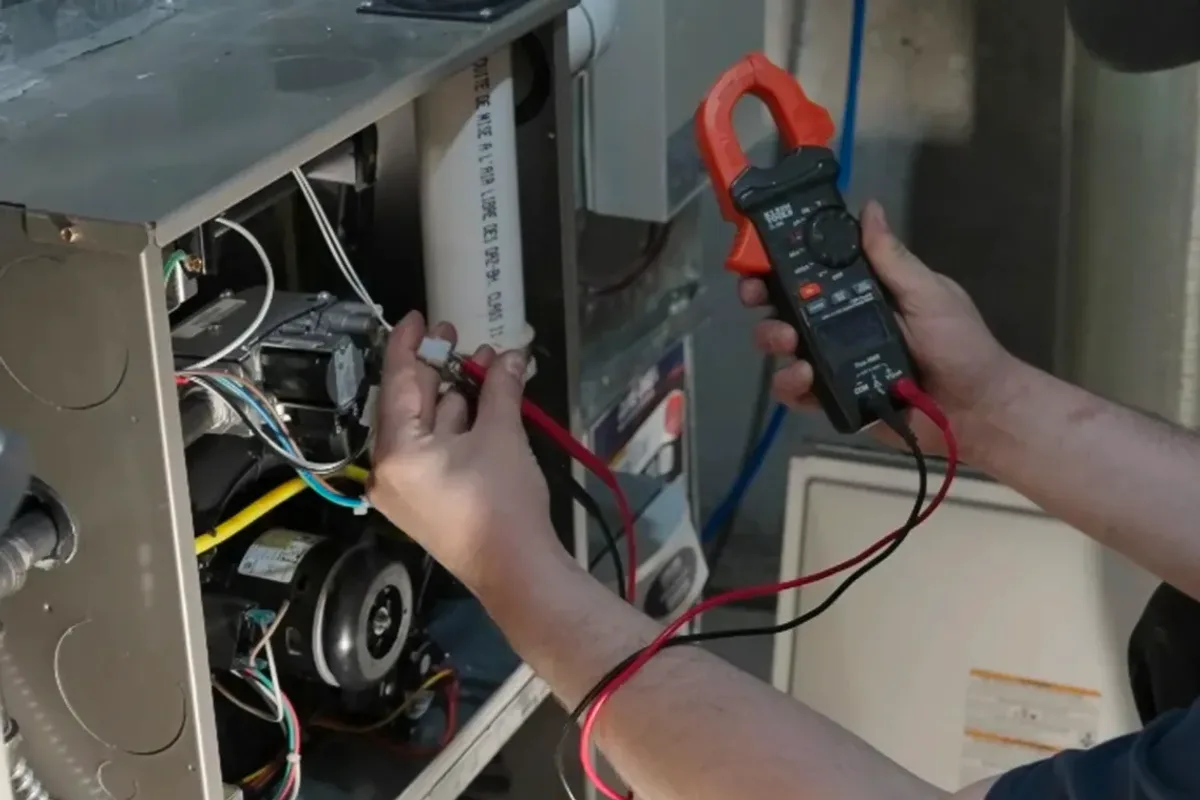
Request furnace repair for a property in Keswick. Include the equipment, the problem or planned work, and your location so the request can be reviewed.
What should I note before requesting furnace repair?
A furnace that will not start, produces uneven heat, cycles frequently, or makes an unfamiliar sound needs diagnosis based on its model and symptoms. The cause may involve ignition, airflow, a limit control, or another component, so symptoms alone do not establish which repair is needed. Service decisions can also differ between a repairable fault and an aging unit being considered for replacement. Record when the problem occurs and any displayed fault code for the service request.
Diagnosis should distinguish a failed ignition component from restricted airflow, a tripped limit, or a control fault because each points to different tests and corrective work. The furnace type, fault codes, operating history, and conditions when it stops help narrow the cause. If repair and replacement are both under consideration, age, condition, and repair history inform the comparison.
Ignition, airflow, and furnace control faults
Filter and component inspection for maintenance
Repair versus high-efficiency furnace replacement
Assessment and Scope
Questions for the Proposed Work
01
Separate ignition problems from airflow and control faults
A furnace that does not light may have an ignition or fuel-delivery fault, while a unit that starts and then stops may be responding to airflow restriction or a safety control. A noisy blower or weak airflow suggests a different line of investigation. The model, fault indication, and sequence of operation matter because replacing a part based only on the symptom can miss the underlying cause.
02
Base maintenance on the furnace and inspection findings
Maintenance findings can include filter condition, airflow, burner operation, thermostat response, and accessible safety controls. The appropriate work depends on the furnace design and manufacturer instructions, rather than a fixed cleaning list applied to every unit. A clogged filter or a control issue may need a specific correction; inspection records also help show whether a recurring symptom is new or has returned.
03
Compare repair with replacement using system condition
A repair may be appropriate when inspection identifies a discrete fault and the rest of the furnace remains serviceable. For an older single-stage unit with repeated repairs, compare the likely repair scope with a replacement option, including the home's heating needs and existing duct connections. A high-efficiency replacement has different venting and installation requirements, so the equipment choice cannot be based on age or efficiency claims alone.
Compare the next step
Ask both bidders to refer to the same fault findings and intended outcome. Separate necessary repair, optional maintenance, and replacement design in the comparison. Check who supplies parts, what labour and follow-up are covered, and whether changes to controls, airflow, or venting are included in either price.
Leave burner, fuel, venting, electrical, and internal equipment work to a qualified contractor. Do not bypass a safety switch or repeatedly reset a furnace.