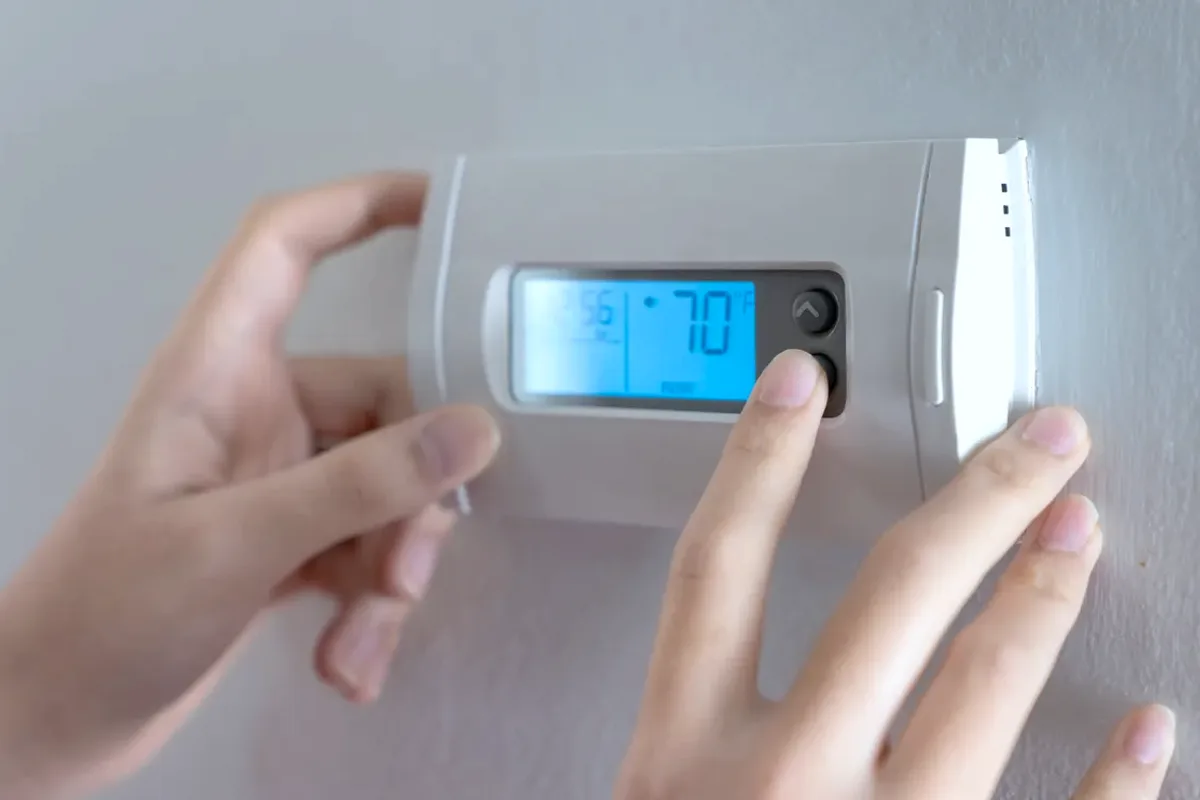
Request thermostat repair & replacement for a property in Keswick. Include the equipment, the problem or planned work, and your location so the request can be reviewed.
What heating or cooling equipment is connected to the thermostat?
A thermostat that will not power on, reads differently from the room, or causes irregular system operation may have a sensor, wiring, control, or compatibility issue. The heating or cooling equipment it controls matters: a thermostat suitable for a single-stage furnace may not support a multi-stage system or heat pump sequence. Note the thermostat model, connected equipment, and observed behavior with the service request. That information helps distinguish repair from replacement and identify compatible options.
Assessment should compare the thermostat's displayed temperature and operating behavior with the equipment response, then check the relevant sensor, wiring, and control functions. Short cycling can arise from causes beyond the thermostat, so the connected system may also need evaluation. Before replacement, confirm compatibility with equipment stages, heat-pump functions, and any humidity-control features in use.
Temperature sensing, calibration, and thermostat faults
Short cycling and connected-system diagnosis
Multi-stage, heat-pump, and humidity-control compatibility
Assessment and Scope
Questions for the Proposed Work
01
Separate sensor and thermostat faults from system cycling
An inaccurate reading can point to sensor location, calibration, or a thermostat fault, while repeated starts and stops may involve equipment controls or another system condition. The thermostat's model, placement, displayed reading, and timing of the cycling help determine whether the control is the cause. This distinction matters because replacing a thermostat will not correct a separate furnace or heat-pump fault.
02
Check compatibility before choosing a replacement
Replacement selection should match the heating and cooling equipment, including the number of stages and whether the property has a heat pump. Some systems also use humidity-control functions that a basic thermostat may not manage. Checking the model numbers and existing control arrangement first helps avoid choosing a device that cannot operate the equipment's intended functions.
03
Use repair findings to decide whether replacement is needed
A repair may be suitable when inspection identifies a discrete sensor, connection, or control issue and the thermostat remains compatible with the system. Replacement may be more appropriate when the control is failing or cannot manage the equipment configuration. If wiring changes are involved, the equipment and thermostat diagrams should guide the scope; internal electrical work is not an occupant troubleshooting task.
Compare the next step
Describe the desired control outcome to each bidder, including scheduling, remote access, sensors, and existing equipment. Ask which interfaces or wiring changes are necessary. Compare setup and demonstrated operation with the installed appliances rather than treat every smart thermostat model as an equivalent replacement.
Thermostat wiring is not universal. Do not connect wires by colour alone or work on energized wiring; a compatible control must be configured for the equipment it serves.